

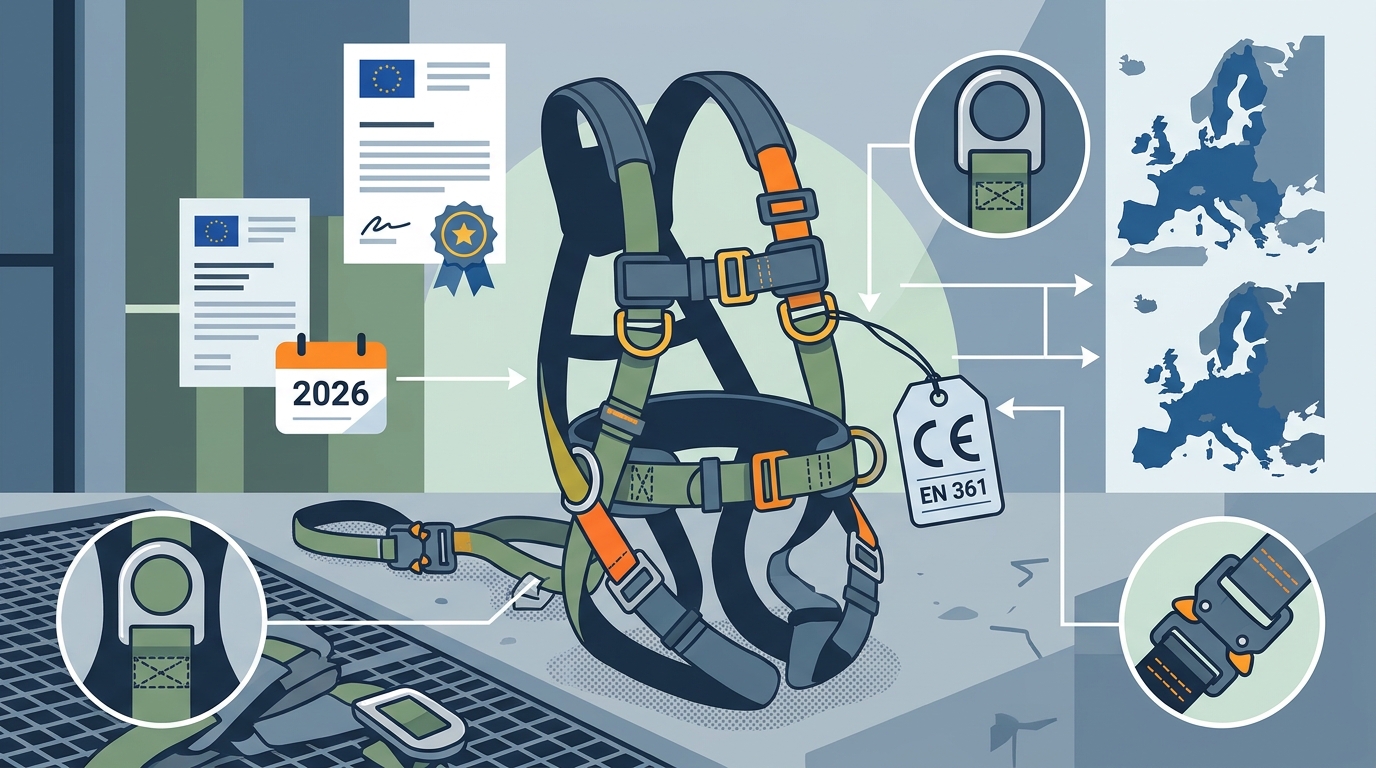
European fall arrest harnesses must comply with the EN 361 standard, which defines the requirements for full-body harnesses used in fall arrest systems. This standard ensures that the equipment can safely arrest a fall and protect the user from injury. In the European Union, these products must also carry the CE marking to demonstrate conformity with the Personal Protective Equipment Regulation (EU) 2016/425. Zavas provides certified equipment that meets these strict regulatory frameworks for industrial safety. For additional details, review the Nakup varovalne opreme obla.
The Core Standard: EN 361
The primary technical standard for full-body harnesses in Europe is EN 361. This standard specifies the design, performance, and testing requirements for harnesses used to arrest falls. It distinguishes between different types of harnesses, such as those for fall arrest and those for work positioning. The standard requires that the harness can withstand a specific impact force without breaking. This ensures that the energy from a fall is managed safely by the system. For additional details, review the Katalogi.
CE Marking and the PPE Regulation
CE marking is the legal requirement for placing personal protective equipment on the European market. Under Regulation (EU) 2016/425, PPE is classified into three categories based on the risk level. Fall arrest harnesses are classified as Category III PPE because they protect against risks that may result in death or irreversible damage. Category III products require a Notified Body to certify the design and production process. This adds a layer of independent verification beyond the manufacturer's self-declaration. For additional details, review the Delovna obutev Za itni.
System Integration and Compatibility
Inspection and Maintenance Requirements
Employer Responsibilities and Training
Key Takeaways
- EN 361 is the primary standard for full-body fall arrest harnesses in Europe.
- CE marking is required for all PPE sold in the EU, with harnesses classified as Category III.
- Category III PPE requires certification by a Notified Body.
- Compatibility between harness components and other system parts is essential for safety.
- Regular inspection and maintenance are mandatory to ensure ongoing compliance.
- Employers must provide training on the correct use and inspection of fall protection equipment.
Frequently Asked Questions
What is the main standard for fall arrest harnesses in Europe?
The main standard is EN 361, which specifies the requirements for full-body harnesses used in fall arrest systems.
Do fall arrest harnesses need CE marking?
Yes, all personal protective equipment sold in the EU must carry the CE mark to demonstrate conformity with the PPE Regulation.
What is the difference between EN 361 and EN 358?
EN 361 covers full-body harnesses, while EN 358 covers safety lanyards. Both are part of a complete fall protection system.
How often should a harness be inspected?
Harnesses should be inspected before each use and at regular intervals as specified by the manufacturer.
Can I use a harness from a different manufacturer with my lanyard?
Only if the components are certified as compatible by the manufacturer. It is best to use components from the same manufacturer.
Where can I buy certified fall arrest harnesses in Slovenia?
Conclusion
Compliance with European regulations for fall arrest harnesses is essential for ensuring worker safety. The EN 361 standard and CE marking are the key requirements that employers and workers must understand. By selecting certified equipment and maintaining it properly, organizations can protect their workforce and meet legal obligations. Zavas is committed to providing high-quality, compliant fall protection equipment that helps businesses maintain safe working environments. For more information on fall protection systems, visit the work at height section on the Zavas website.