

Procuring personal protective equipment (PPE) is a critical operational task for any Slovenian business, yet it is frequently mishandled due to a lack of specialized knowledge. According to recent industry safety reports, nearly 40% of workplace incidents involve equipment that was either unsuitable for the specific hazard or improperly certified. When companies order PPE based solely on price or generic descriptions, they risk non-compliance with EU regulations and, more importantly, employee safety. This guide outlines the most frequent procurement errors made by Slovenian firms and provides a clear framework for avoiding them.
Understanding PPE Certifications and Standards
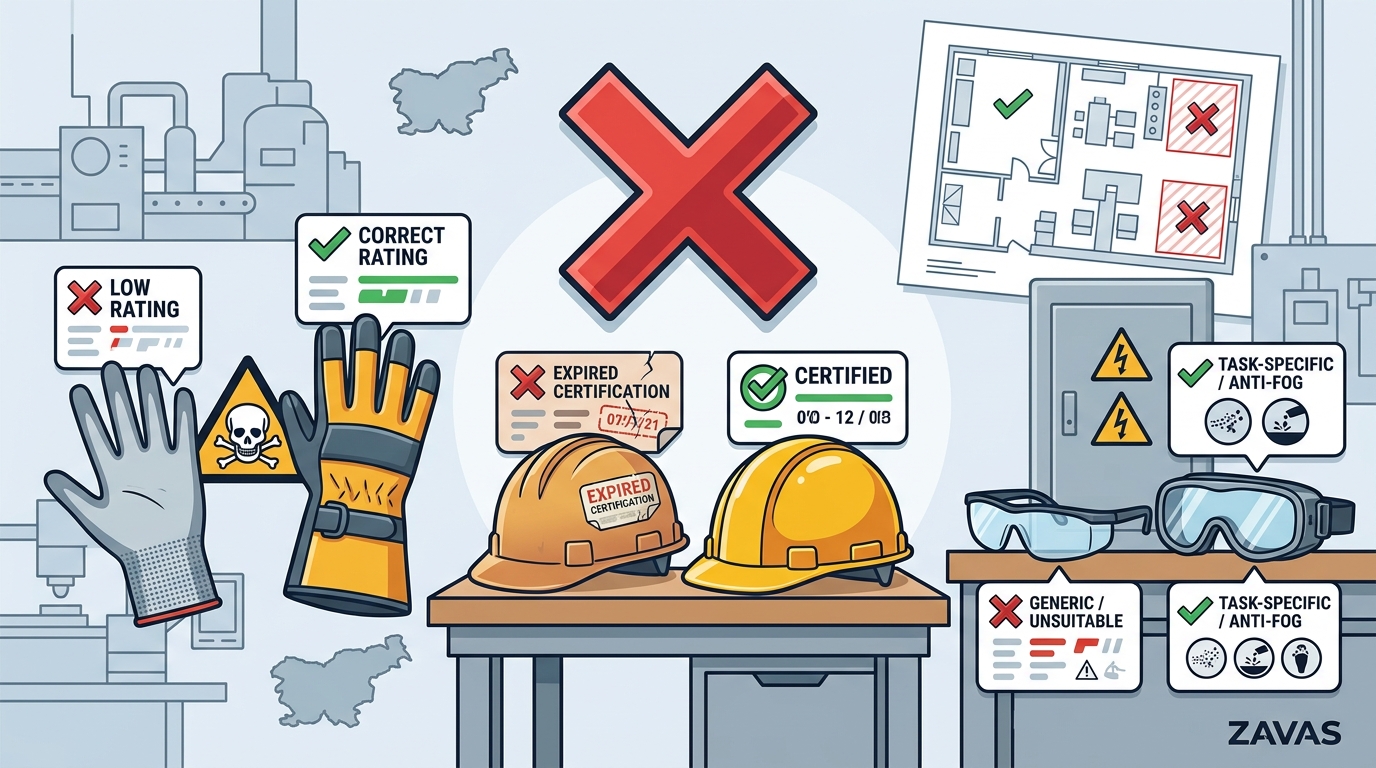
One of the most critical mistakes is ordering PPE without verifying its certification class. In the European Union, PPE is categorized into three classes based on the severity of the risk it mitigates. Class III PPE, which includes high-risk equipment like fall protection and respiratory gear, requires the most rigorous testing. EU regulations mandate that all PPE must carry the CE marking and be accompanied by a declaration of conformity.
Many Slovenian companies make the error of purchasing Class I or II equipment for tasks that require Class III protection. For example, using standard safety shoes for tasks involving molten metal or extreme electrical hazards is a fatal oversight. Always check the specific EN standards printed on the product. For footwear, look for codes like S3 for slip resistance and penetration protection. For respiratory protection, ensure the filter class matches the airborne contaminants present in your environment.
Ignoring Workplace-Specific Hazards
Generic PPE orders are a common pitfall. A construction site in Ljubljana has different hazards than a chemical plant in Koper or an agricultural facility in the Pomurje region. Ordering the same uniform for all employees ignores the nuanced risks of each department. For instance, Slovenian labor safety guidelines emphasize that visibility clothing must meet specific luminosity standards depending on traffic speed and ambient light conditions.
To avoid this, conduct a thorough risk assessment for each role. If your employees work in wet conditions, standard cotton workwear will absorb moisture and lead to hypothermia risks in winter. Instead, opt for waterproof, breathable fabrics like those found in specialized industrial footwear. If your team works at heights, ensure that harnesses and lanyards are compatible with the anchor points available on-site. Tailoring your PPE to the specific hazard profile is not just a compliance issue; it is a cost-saving measure that reduces injury-related downtime.
The Cost of Sizing and Fit Errors
Ordering PPE without accurate sizing data is a logistical and safety nightmare. Ill-fitting gloves reduce dexterity, leading to more errors and potential injuries. Boots that are too tight can cause circulation issues, while those that are too loose increase the risk of trips and falls. Health and safety experts note that proper fit is the primary determinant of PPE effectiveness.
Many companies make the mistake of ordering one-size-fits-all solutions or relying on outdated size charts. The best approach is to organize a sizing session with your employees. Use the manufacturer's specific sizing guide, which often varies between brands. For example, industrial shoe sizing can differ significantly from standard retail footwear. By investing time in accurate sizing, you ensure that employees are more likely to wear their PPE consistently, as comfort directly correlates with compliance.
Choosing the Right Supplier in Slovenia
2.Not all suppliers are created equal. Some online retailers may sell counterfeit or expired PPE. A major mistake is choosing a supplier based solely on the lowest price without verifying their authorization status. Authorized distributors provide genuine products with valid warranties and technical support. Insurance providers in Slovenia often require proof that PPE was sourced from certified suppliers to validate workplace injury claims.
Look for suppliers who offer comprehensive catalogs and technical documentation. Companies like Zavas specialize in professional PPE and offer detailed product specifications, including material composition and certification details. They also provide expert advice on selecting the right equipment for specific industries. A reliable supplier will also offer flexible delivery options and easy return policies for sizing issues, which is crucial for large orders.
Overlooking Maintenance and Replacement Cycles
PPE is not a one-time purchase. Many companies fail to budget for the replacement of consumable items like filters, gloves, and safety glasses. Others ignore the maintenance requirements of durable goods. For example, EU safety standards require that fall protection equipment be inspected regularly for signs of wear. Ignoring these cycles can lead to catastrophic failure.
Create a maintenance schedule for all PPE. Train employees on how to clean and store their gear properly. For instance, safety boots should be dried naturally, not near direct heat sources, to preserve the integrity of the materials. By extending the lifespan of your PPE through proper care, you reduce long-term procurement costs. Additionally, staying informed about industry updates ensures you are aware of new technologies that may offer better protection or comfort.
PPE Selection Comparison Matrix
The following table summarizes key PPE categories and the common mistakes associated with their procurement.
| PPE Category | Common Mistake | Correct Approach | Key Standard |
|---|---|---|---|
| Safety Footwear | Ignoring slip or penetration resistance | Select based on floor type and hazards | EN ISO 20345 |
| High-Visibility Clothing | Using non-certified reflective materials | Ensure EN ISO 20471 compliance | EN ISO 20471 |
| Respiratory Protection | Wrong filter class for the contaminant | Match filter to specific airborne risks | EN 149 |
| Fall Protection | Ignoring anchor point compatibility | Verify system-wide compatibility | EN 361 |
| Hand Protection | One glove fits all approach | Assess chemical and mechanical risks | EN 388 |
Key Takeaways
- Verify Class III Certification: Always check for CE marking and the correct EN standard for high-risk tasks.
- Conduct Risk Assessments: Tailor PPE to specific workplace hazards, not just job titles.
- Prioritize Fit: Organize sizing sessions to ensure comfort and compliance.
- Choose Authorized Suppliers: Buy from reputable distributors like Zavas to avoid counterfeit goods.
- Maintain Equipment: Implement regular inspection and replacement schedules.
- Educate Employees:: Train staff on the proper use and care of their PPE.
- Budget for Lifecycle Costs: Include maintenance and replacement in your annual safety budget.
Frequently Asked Questions
What is the difference between Class I, II, and III PPE?
Class I PPE mitigates minor risks. Class II PPE addresses moderate risks. Class III PPE is for the most severe risks, such as death or permanent injury, and requires the highest level of certification and testing.
How often should safety shoes be replaced?
Safety shoes should be replaced when the midsole compresses, the outsole wears down, or the protective cap is damaged. Typically, this is every 6 to 12 months depending on usage intensity.
Can I use regular workwear for industrial cleaning?
No. Regular workwear may not offer chemical resistance. You need specialized aprons and suits that are certified for the specific chemicals you are handling.
Why is proper sizing important for PPE?
Ill-fitting PPE can fail to protect against hazards. For example, loose gloves can get caught in machinery, and tight boots can cause fatigue and reduced mobility.
Where can I buy certified PPE in Slovenia?
You can purchase certified PPE from authorized distributors like Zavas, which offers a wide range of industrial safety equipment and expert advice.
What are the most common PPE mistakes?
The most common mistakes include ignoring certifications, poor fit, and failing to replace worn equipment. These errors compromise safety and compliance.
How do I choose the right respiratory mask?
Choose a mask based on the type of airborne contaminant. Use the filter class indicated on the mask to ensure it matches the hazard level.
Secure Your Workforce Safety Today
Avoiding these common PPE ordering mistakes is essential for maintaining a safe and compliant workplace in Slovenia. By prioritizing certification, fit, and supplier reliability, you protect your employees and your business. Visit Zavas to explore our comprehensive range of certified personal protective equipment and request a consultation for your specific needs.