
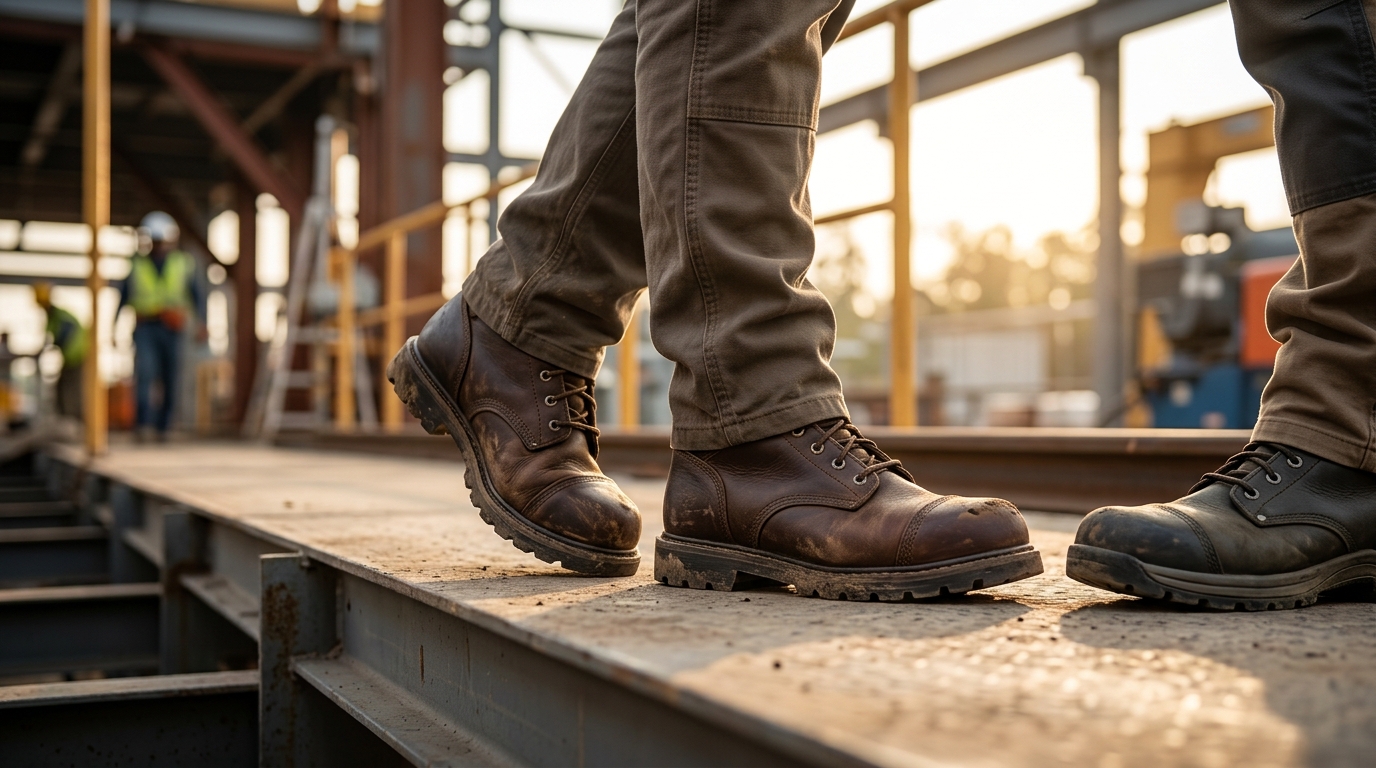
Choosing the right safety footwear is not merely a matter of comfort; it is a critical operational decision that directly impacts worker safety and regulatory compliance. According to EN ISO 20345 standards, protective footwear is categorized by specific performance metrics that dictate where and how the boots can be legally and safely worn. Understanding these distinctions prevents costly compliance errors and ensures that employees are protected against the specific hazards of their environment.
Understanding the EN ISO Standards
Protective footwear standards are designed to provide a universal language for safety across industries. The core requirement for all safety shoes is a toe cap capable of withstanding an impact of 200 joules. This is a non-negotiable baseline for any footwear labeled as "safety." However, the letters following the number indicate additional protective features. These features determine the boot's suitability for wet environments, slippery surfaces, or hazardous materials.
At Zavas, we specialize in curating high-performance footwear that meets these rigorous European norms. Whether you are managing a construction site or a food processing plant, selecting the correct standard is the first step in risk mitigation. The hierarchy generally moves from basic impact protection to comprehensive environmental shielding.
S1 vs S2: Water Resistance and Penetration
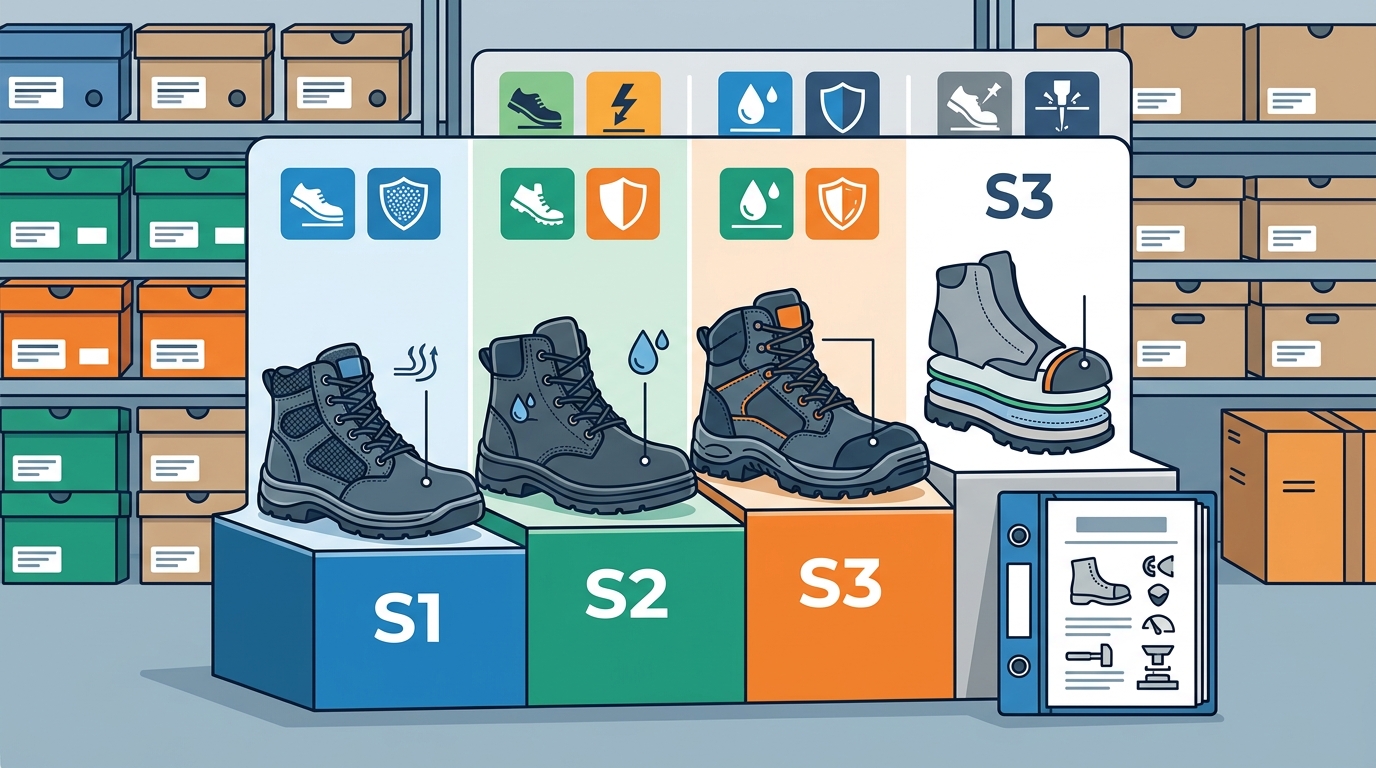
The distinction between S1 and S2 footwear is primarily defined by water absorption and sole penetration resistance. Both standards include an antistatic property, a closed heel area, and energy absorption in the heel region. These features are essential for general industrial environments where static discharge could pose a risk.
S1: Basic Protection
S1 footwear is designed for dry environments. It features a fuel-resistant sole, meaning it can withstand contact with hydrocarbons without degrading rapidly. However, it lacks a membrane or treatment to prevent water from penetrating the upper material. This makes S1 ideal for indoor workshops, warehouses, and light manufacturing where the floor is dry and clean.
S2: Enhanced Water Resistance
S2 footwear builds upon the S1 foundation by adding a water-resistant upper. This is typically achieved through a hydrophobic treatment of the leather or a waterproof membrane integrated into the boot. The critical differentiator is the penetration-resistant midsole. While S1 relies on the density of the materials, S2 often includes a composite or steel insert to prevent sharp objects from piercing through the sole. This makes S2 a versatile choice for outdoor work, agriculture, and light construction.
For more details on specific S2 models, you can explore our latest safety guides on protective clothing and footwear.
S3: The Gold Standard for Heavy Industry
S3 footwear is essentially S2 footwear with an added layer of protection against punctures. It includes a penetration-resistant midsole, which is a mandatory requirement for this class. This midsole is often made from Kevlar, composite materials, or thin steel plates, providing a barrier against nails, glass, and sharp debris.
The S3 standard is the most common requirement in construction, civil engineering, and heavy manufacturing. The combination of water resistance, anti-penetration, and fuel-resistant soles makes it the most robust option for general-purpose safety work. At Zavas, we stock a wide range of S3 boots from leading brands like Helly Hansen and Bekina, ensuring you find the right fit for your team.
When selecting S3 boots, consider the weight. Modern composite materials offer the same protection as steel but are significantly lighter, reducing worker fatigue over long shifts. For example, our Bekina Steplite Easy Grip S5 boots are designed to be 40% lighter than traditional rubber boots while maintaining high thermal insulation and grip.
S4 and S5: Rubber and One-Piece Options
S4 and S5 standards apply to rubber or polyurethane one-piece boots. These are typically used in environments with high moisture, chemicals, or hygiene requirements, such as food processing, wastewater treatment, and agriculture.
S4: Waterproof Construction
S4 boots are made from a single piece of material, eliminating seams where water could enter. They are inherently waterproof and do not require additional membranes. This makes them ideal for wet, muddy, or chemically aggressive environments.
S5: Added Penetration Resistance
S5 footwear includes all the features of S4 plus a penetration-resistant midsole. This is crucial for agricultural work where hidden sharp objects like wire or nails may be present in the soil. The seamless construction ensures that no dirt or bacteria can accumulate in the seams, aiding in hygiene and cleanliness.
If you are working in wet conditions, consider our range of waterproof safety boots designed for maximum durability and comfort.
Comparison Table of Safety Footwear
The following table summarizes the key differences between the most common safety footwear standards to help you make an informed decision.
| Standard | Toe Cap | Antistatic | Energy Absorption | Water Resistance | Penetration Resistance | Fuel Resistant Sole | Typical Use Case |
|---|---|---|---|---|---|---|---|
| S1 | Yes | Yes | Yes | No | No | Yes | Dry industrial environments |
| S2 | Yes | Yes | Yes | Yes | No | Yes | Light construction, agriculture |
| S3 | Yes | Yes | Yes | Yes | Yes | Yes | Heavy industry, construction |
| S4 | Yes | Yes | Yes | Yes | No | N/A | Food processing, wet areas |
| S5 | Yes | Yes | Yes | Yes | Yes | N/A | Agriculture, wastewater |
Key Takeaways
- Toe Cap is Mandatory: All S1-S5 standards require a 200-joule impact-resistant toe cap.
- Water Resistance Matters: S2, S3, S4, and S5 offer varying degrees of water protection, crucial for outdoor or wet work.
- Penetration Protection: Only S3 and S5 include a midsole to prevent sharp objects from piercing the foot.
- Material Choice: Leather boots (S1-S3) offer durability and breathability, while rubber boots (S4-S5) offer superior waterproofing and hygiene.
- Antistatic Feature: All safety footwear standards include antistatic properties to prevent static discharge.
- Brand Reliability: Brands like Helly Hansen and Bekina provide specialized technologies, such as HH AERO STRIDE for cushioning.
- Compliance is Key: Always match the footwear standard to the specific hazard assessment of your workplace.
Frequently Asked Questions
What is the main difference between S1 and S2 footwear?
S2 footwear includes a water-resistant upper and a penetration-resistant midsole, whereas S1 footwear is only fuel-resistant and lacks water resistance and penetration protection.
Can I wear S1 boots in the rain?
No, S1 boots are not water-resistant. Water can penetrate the upper material, leading to wet feet and potential damage to the boot. S2 or S3 boots are recommended for wet conditions.
What does S3 stand for in safety boots?
S3 stands for safety footwear with a water-resistant upper and a penetration-resistant midsole. It is the standard for heavy industrial and construction work.
Are S4 and S5 boots suitable for construction?
S5 boots are suitable for construction if the environment is wet or muddy, as they offer penetration resistance. S4 boots lack penetration resistance and are better for clean, wet environments like food processing.
How often should I replace my safety boots?
Safety boots should be replaced when the toe cap is damaged, the sole is worn through, or the upper material is compromised. Regular inspections are essential to ensure ongoing protection.
What is the benefit of composite toe caps?
Composite toe caps are lighter than steel and do not conduct temperature, making them ideal for extreme weather conditions. They are also non-metallic, which is useful for airport security.
Do I need antistatic boots?
Yes, all EN ISO 20345 safety footwear is antistatic by default. This feature helps prevent the buildup of static electricity, which can be hazardous in certain industrial environments.
Contact Zavas for Expert Advice
Selecting the right protective footwear is a vital investment in your team's safety and productivity. Whether you need S1 for light industrial work or S5 for agricultural tasks, Zavas offers a comprehensive range of certified safety boots and clothing. Our experts are ready to help you navigate the standards and find the perfect fit for your operational needs. Visit our online store or contact our customer service team for personalized advice.