

Where to Buy Bulk Safety Boots for Construction Crews in 2026
ASTM and EN Certification Standards
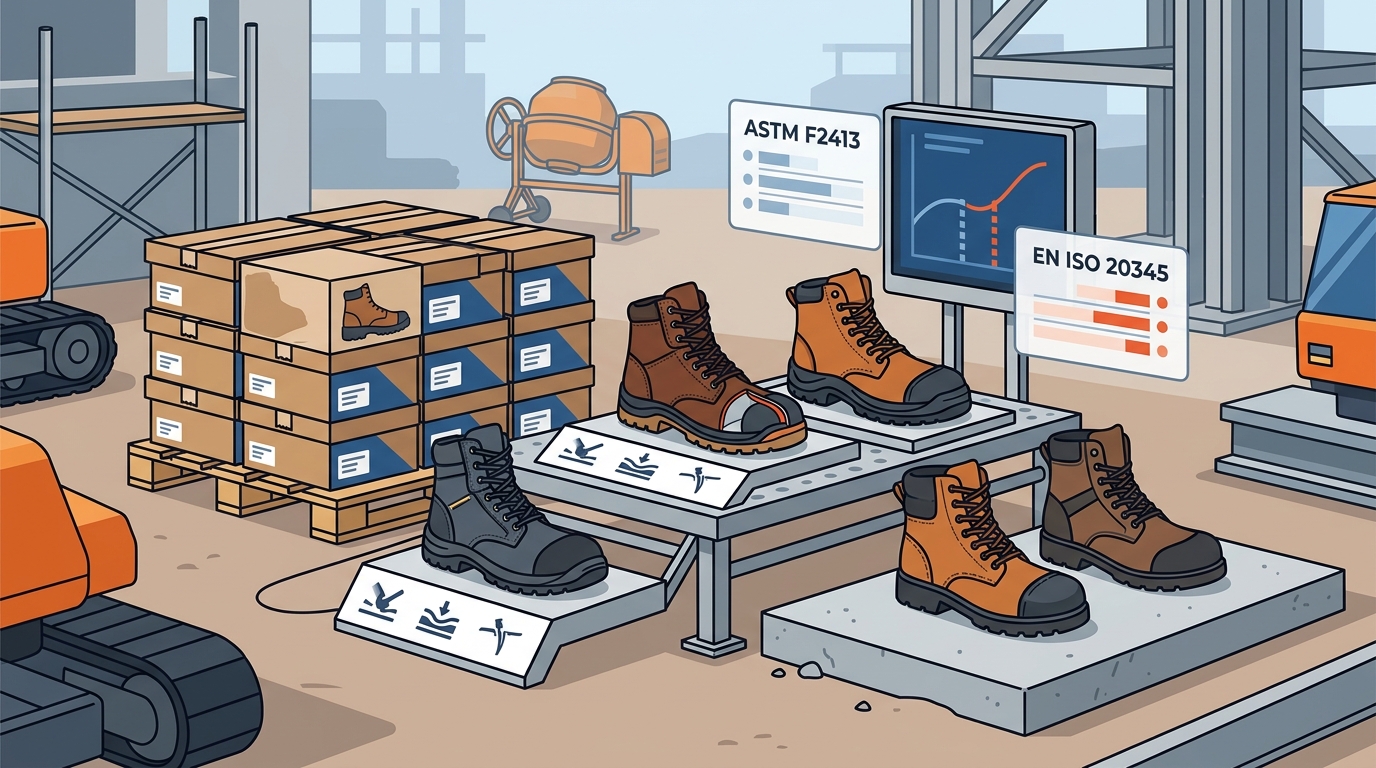
Understanding safety footwear standards is the first step in ensuring crew protection. ASTM F2413 is the standard specification for performance requirements for safety, security, and occupational footwear. It defines the minimum performance levels for impact, compression, and puncture resistance. While ASTM is the primary standard in North America, European distributors like Zavas primarily stock footwear certified to EN ISO 20345. This European standard categorizes safety footwear into classes S1, S2, S3, and S4, with S3 being the most common for heavy construction due to its requirements for a midsole puncture-resistant insole and a heel energy-absorbing area. For additional details, review the Novice.
Decoding the Safety Codes
Compliance and Liability
Procurement managers must ensure that all purchased footwear meets the regulatory requirements of their operating jurisdiction. In the European Economic Area, the CE marking is mandatory for PPE. This marking indicates that the product has been assessed by a notified body and complies with the EU PPE Regulation. By sourcing from a specialized distributor, you ensure that every pair of boots in your bulk order carries the correct certification documentation, reducing your liability in the event of a workplace incident. For additional details, review the Katalogi.
Bulk Purchasing Strategies for Construction
Inventory Management and Sizing
One of the biggest challenges in bulk purchasing is managing shoe sizes. Construction crews often have a wide range of foot sizes. A strategic approach involves creating a size distribution profile for your workforce. You can then order a mix of sizes that matches your crew's needs. Zavas provides tools to help you manage this, including a shopping cart system that allows you to add multiple sizes and quantities in a single transaction. This reduces the administrative burden of placing multiple small orders.
Lead Times and Logistics
Construction projects operate on tight schedules. Delays in receiving PPE can halt work and incur penalties. When buying in bulk, you must account for lead times. Established distributors maintain stock of popular models to ensure rapid dispatch. By partnering with a supplier that has a robust logistics network, you can ensure that your boots arrive on site before your crew starts work. This is particularly important for new projects or when replacing worn-out footwear at the start of a season.
Selecting the Right Boot for Site Conditions
Not all safety boots are created equal. The right choice depends on the specific hazards present on your construction site. For example, if your crew works in wet or muddy conditions, you need boots with a waterproof membrane and a high-traction outsole. If they work in cold environments, thermal insulation becomes a priority. Zavas offers a wide range of brands, including Bolle Safety, which is known for its durable and comfortable footwear designed for demanding industrial environments.
Comparing Popular Safety Boot Models
| Model Type | Standard | Key Feature | Best For |
|---|---|---|---|
| Composite Toe S3 | EN ISO 20345 S3L | Non-metallic toe, puncture resistant | Electrical work, metal detector sites |
| Steel Toe S3 | EN ISO 20345 S3 | Steel toe, high durability | Heavy construction, general site work |
| Waterproof S3 | EN ISO 20345 S3 WR | Waterproof membrane, high grip | Wet, muddy, or outdoor conditions |
Comfort and Productivity
Comfort is not a luxury; it is a safety factor. Workers who are uncomfortable are more likely to take shortcuts or suffer from fatigue, which increases the risk of accidents. When selecting boots for bulk purchase, prioritize models with ergonomic designs and quality insoles. Brands like Helly Hansen and Elten, available at Zavas, are known for their focus on worker comfort and durability. Investing in high-quality boots can improve worker morale and productivity, leading to a better return on investment.
Verifying Your PPE Supplier
Service and Support
Quality Assurance
Key Takeaways
- ASTM F2413 and EN ISO 20345 are the primary standards for safety footwear, with S3 being the recommended class for heavy construction.
- Composite toe caps (S3L) are preferred for electrical work and sites with metal detectors, while steel toe (S3) is suitable for general heavy construction.
- Comfort and ergonomics are critical for worker safety and productivity; prioritize brands known for quality and durability.
- Verify your supplier's expertise, service, and quality assurance processes to ensure reliable procurement and compliance.
- Use size distribution profiles to manage inventory effectively and ensure every worker gets the right fit.
- Plan for lead times to avoid delays in receiving PPE, especially for new projects or seasonal changes.
Frequently Asked Questions
What is the difference between ASTM and EN standards for safety boots?
How many pairs of safety boots should I buy for a construction crew?
It is recommended to buy at least one pair per worker, plus a small buffer for replacements due to wear and tear or sizing issues. A buffer of 5-10% is a common practice to ensure you have replacements available without needing to place a new order.
Are composite toe boots as safe as steel toe boots?
Yes, both composite and steel toe boots must meet the same impact and compression resistance requirements (200 Joules and 15 kN, respectively). The main difference is that composite toes are non-metallic, making them lighter and less affected by temperature changes. They are also invisible to metal detectors.
How do I ensure the boots fit my entire crew?
Create a size distribution profile for your workforce. Measure each worker's foot and record their size. Then, order a mix of sizes that matches this profile. Specialized distributors like Zavas allow you to order multiple sizes in a single transaction, making this process easier.
What is the lead time for bulk orders of safety boots?
Lead times vary depending on the supplier and the specific model. Established distributors often have popular models in stock, allowing for rapid dispatch. It is best to confirm lead times with your supplier before placing a large order, especially if you have a tight project schedule.