
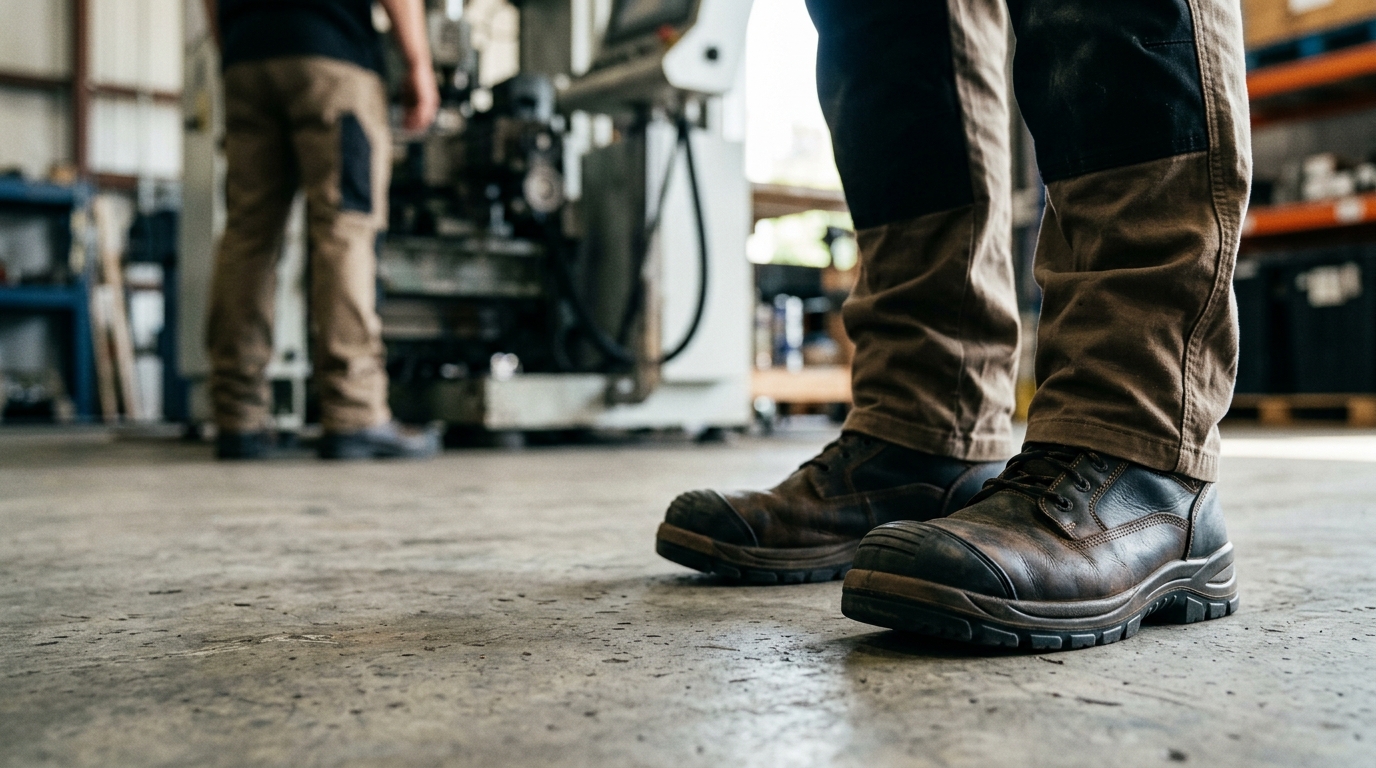
Choosing the right protective footwear is not merely a matter of comfort; it is a critical component of workplace safety compliance. According to ISO standards, safety shoes are categorized by specific performance metrics that dictate their suitability for different industrial environments. Understanding these distinctions prevents costly compliance errors and ensures worker protection against mechanical, chemical, and electrical hazards.
Understanding Safety Standards
Safety footwear is governed by the European standard EN ISO 20345. This framework defines the minimum requirements for toe cap impact and compression resistance. All safety shoes must withstand a 200-joule impact and a 15-kilonewton compression force. However, the letter suffixes indicate additional protective features relevant to specific work environments.
The primary distinction lies in the upper material's resistance to water and water penetration. This is where the S1, S2, and S3 classifications diverge significantly. Selecting the wrong class can lead to premature footwear failure and increased risk of foot injuries in wet or hazardous conditions.
S1 vs S2: The Water Resistance Factor
S1 safety shoes are the baseline for industrial environments. They feature a closed heel area, an antistatic construction, and a fuel-resistant sole. Crucially, S1 shoes include a energy-absorbing seat. However, they lack water resistance. This makes them ideal for dry warehouses, logistics centers, and indoor manufacturing plants where moisture is not a primary concern.
S2 safety shoes build directly upon the S1 foundation. The defining characteristic of S2 footwear is its resistance to water penetration and absorption. The upper material is treated or constructed to repel liquids, protecting the wearer's feet from wet floors and light splashes. This makes S2 shoes a versatile choice for food processing, agriculture, and outdoor industrial tasks.
At Zavas, we stock a range of S2 compliant boots designed for durability and comfort. For example, the HH Oslo 2.0 offers advanced moisture management, though it is classified as S1PS, highlighting the importance of checking specific ratings for water resistance.
S3 and Beyond: Enhanced Protection
S3 safety shoes are essentially S2 shoes with an added layer of protection: a puncture-resistant midsole. This layer, often made from Kevlar or composite materials, prevents sharp objects like nails or glass from piercing through the sole and injuring the foot. This classification is mandatory for construction sites, forestry, and heavy industry where ground hazards are prevalent.
Some S3 shoes also offer additional features such as electrical discharge (ESD) properties or chain saw protection (CS). When evaluating S3 footwear, consider the specific terrain. For muddy or slippery conditions, look for outsoles with high grip ratings, such as the Bekina Steplite series, which prioritizes slip resistance and thermal insulation.
Additional Classes: SB and F
It is important to note the SB class. SB shoes meet the basic toe protection requirements but lack the antistatic and energy-absorbing seat features of S1. They are often used in light industrial settings. Furthermore, the 'F' suffix indicates chain saw protection, a specialized category for forestry workers that requires rigorous testing beyond standard impact metrics.
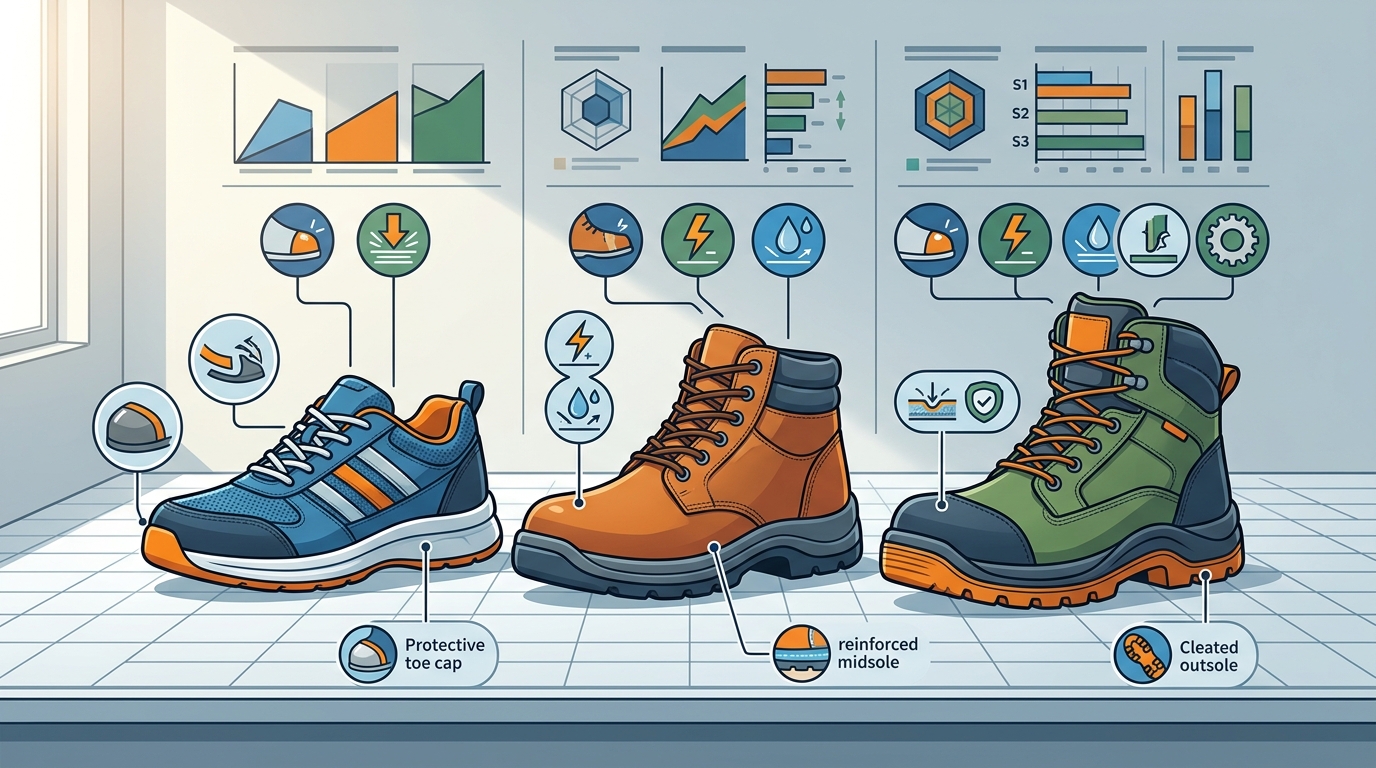
Comparison Table
The following table summarizes the key differences between the most common safety footwear classes to assist in your procurement decision.
| Class | Toe Protection | Antistatic | Energy Absorption | Water Resistance | Puncture Resistance | Typical Use Case |
|---|---|---|---|---|---|---|
| SB | Yes (200J) | No | No | No | No | Light industrial |
| S1 | Yes (200J) | Yes | Yes | No | No | Dry warehouses |
| S2 | Yes (200J) | Yes | Yes | Yes | No | Food processing |
| S3 | Yes (200J) | Yes | Yes | Yes | Yes | Construction sites |
Key Takeaways
- All safety shoes must meet the 200-joule toe impact standard defined by EN ISO 20345.
- S1 shoes are antistatic and have energy-absorbing heels but are not water-resistant.
- S2 shoes add water penetration resistance to the S1 baseline, making them suitable for wet environments.
- S3 shoes include a puncture-resistant midsole, essential for construction and heavy industry.
- Always verify the specific rating on the product label, as features like ESD vary by model.
- Proper footwear selection reduces workplace accidents and ensures regulatory compliance.
- Zavas provides expert consultation to help you select the correct class for your industry.
Frequently Asked Questions
What is the main difference between S1 and S2 safety shoes?
The primary difference is water resistance. S2 shoes are resistant to water penetration and absorption, whereas S1 shoes are not. Both share antistatic properties and energy-absorbing heel seats.
Are S3 shoes necessary for construction work?
Yes, S3 shoes are generally required for construction because they include a puncture-resistant midsole. This protects the feet from sharp objects on the ground, which is a common hazard in building sites.
Can I wear S1 shoes in wet conditions?
It is not recommended. S1 shoes do not resist water penetration. Wearing them in wet conditions can lead to soaked feet, increased risk of slips, and faster degradation of the shoe's structural integrity.
What does the 'PS' in S1PS mean?
PS stands for 'Puncture Resistance Sole'. An S1PS shoe offers the standard S1 protections plus a puncture-resistant layer, bridging the gap between S1 and S3 classifications.
How do I choose between leather and synthetic safety uppers?
Leather offers superior durability and breathability, making it ideal for long-term industrial use. Synthetic materials are often lighter and more resistant to specific chemicals or water, suitable for food or chemical industries.
Do safety shoes expire?
While they do not have a strict expiration date, safety shoes degrade over time. The midsole compression and outsole wear reduce protective capabilities. It is recommended to replace them every 6 to 12 months depending on usage intensity.
Contact Zavas for Expert Advice
Selecting the correct safety footwear is vital for your team's well-being and your company's compliance. The experts at Zavas are ready to assist you in navigating the complex landscape of safety standards. Visit our blog for more guides or contact our sales team directly to discuss your specific industrial requirements.