
Essential Safety Certifications for Workplace Protective Equipment
Workplace protective equipment must carry specific safety certifications to ensure it meets legal and operational standards. In the European Union, the CE marking is the primary indicator that a product has undergone conformity assessment. Zavas provides a wide range of certified personal protective equipment, ensuring that businesses can source compliant gear for their specific industrial needs. For additional details, review the Nakup varovalne opreme obla.
The Role of CE Marking in PPE
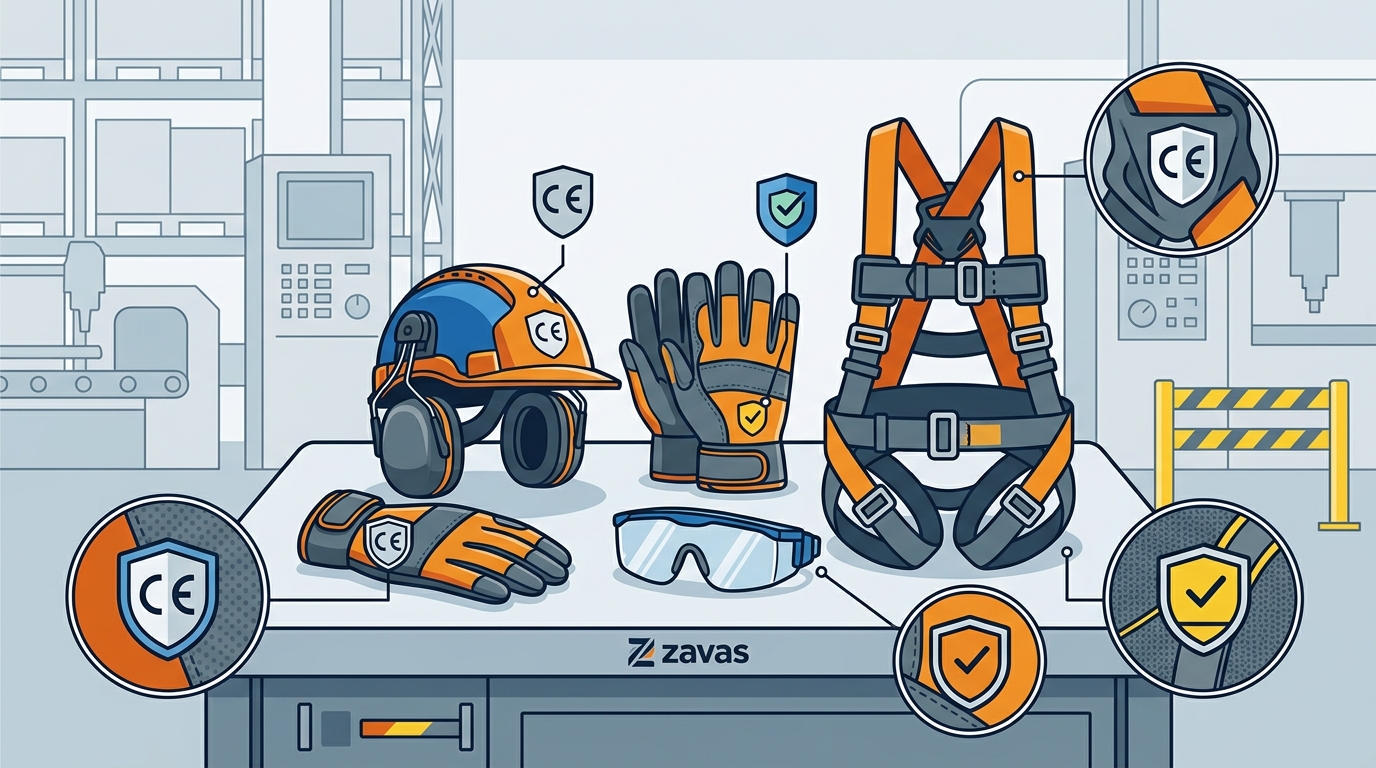
The CE marking is a mandatory conformity mark for products sold within the European Economic Area. It indicates that a product has been assessed by a manufacturer or notified body to meet EU safety, health, and environmental protection requirements. For personal protective equipment, the CE mark is not just a logo; it is a legal declaration of compliance with the EU PPE Regulation.
When selecting gear, you must look for the CE mark on the product or its packaging. This mark is accompanied by a four-digit identification number of the Notified Body that has certified the product. Without this specific number, the CE mark is invalid for high-category PPE. Zavas ensures that all items in its catalog, from Helly Hansen safety boots to specialized clothing, carry the appropriate CE documentation.
Understanding PPE Categories
The EU PPE Regulation classifies protective equipment into three categories based on the severity of the risk. Category I covers minimal risks, such as minor cuts or cold weather. Category II covers intermediate risks, while Category III covers severe risks that can cause death or irreversible harm, such as falls from height or electrical shock.
Key Industry Standards to Verify
While the CE mark is the umbrella certification, it is backed by specific harmonized standards. These standards define the exact performance requirements for different types of equipment. For footwear, the EN ISO 20345 standard is the most common, defining requirements for safety, protective, and occupational footwear.
For head protection, the EN 397 standard is the benchmark for industrial safety helmets. When you see a helmet labeled with EN 397, you know it has passed rigorous impact and penetration tests. Zavas stocks a range of Bolle Safety and other leading brands that adhere to these strict European standards, ensuring that your workforce is protected by equipment that has been tested to the highest levels.
Electrical Safety and Specialized Certifications
In environments with electrical hazards, standard PPE is not enough. You need equipment certified for electrical protection, such as EN 60903 for insulating gloves or EN 61479-1 for arc flash protection. These certifications ensure that the material can withstand specific voltage levels or thermal energy without failing.
For workers in the electrical sector, verifying these specific standards is non-negotiable. Zavas provides specialized protective clothing and accessories that meet these electrical safety requirements. By choosing equipment with these specialized certifications, you mitigate the risk of severe electrical accidents in the workplace.
How to Verify Certification Authenticity
Counterfeit or non-compliant PPE is a significant risk in the global supply chain. To verify authenticity, you should check for the CE mark, the Notified Body number, and the manufacturer's name and address. You can also cross-reference the Notified Body number with the European Commission's NANDO database to ensure the body is authorized to certify that specific type of PPE.
Buying from a reputable supplier like Zavas reduces this risk significantly. Zavas works directly with established manufacturers and ensures that all products come with the necessary technical documentation. This due diligence is essential for maintaining a safe and compliant workplace.
Key Takeaways
- The CE mark is the primary legal requirement for PPE in the EU, indicating conformity with safety regulations.
- PPE is categorized into three levels based on risk severity, with Category III covering the most dangerous hazards.
- Specific harmonized standards, such as EN ISO 20345 for footwear and EN 397 for helmets, define performance requirements.
- Electrical environments require specialized certifications like EN 60903 for insulating gloves.
- Verifying the Notified Body number and manufacturer details is crucial to avoid counterfeit or non-compliant gear.
- Zavas provides a wide range of certified PPE, ensuring that businesses can source compliant equipment for various industrial needs.
Frequently Asked Questions
What is the difference between CE marking and ISO certification?
CE marking is a legal requirement for selling products in the EU, while ISO certification is a voluntary standard that demonstrates compliance with international best practices. Many PPE products carry both, but CE is the mandatory one for the European market.
How often should PPE be recertified?
PPE itself does not need to be recertified, but it must be inspected regularly for wear and tear. The manufacturer's certification is valid as long as the product design and manufacturing process remain unchanged. However, you should replace PPE if it shows signs of damage or if it reaches the end of its service life.
Can I use PPE from outside the EU if it has an ANSI certification?
ANSI certifications are recognized in North America but do not automatically guarantee compliance with EU regulations. To use PPE in the EU, it must carry the CE mark and meet the relevant EU harmonized standards. Zavas ensures that all its products are CE certified for the European market.
What is a Notified Body in the context of PPE?
A Notified Body is an independent organization authorized by the European Commission to assess the conformity of certain high-risk products before they are placed on the market. For Category III PPE, a Notified Body must be involved in the certification process.
Where can I find the CE mark on a piece of PPE?
The CE mark is typically found on the product itself, its packaging, or the accompanying documentation. For footwear, it is often on the label inside the shoe. For helmets, it is usually on the side or back of the shell. Zavas products are clearly labeled to make verification easy.
Conclusion
Ensuring that your workplace protective equipment carries the correct safety certifications is a fundamental aspect of occupational health and safety. By understanding the CE marking, PPE categories, and specific industry standards, you can make informed decisions that protect your workforce. Zavas is committed to providing high-quality, certified PPE that meets the highest European standards, ensuring that your business remains compliant and safe.