
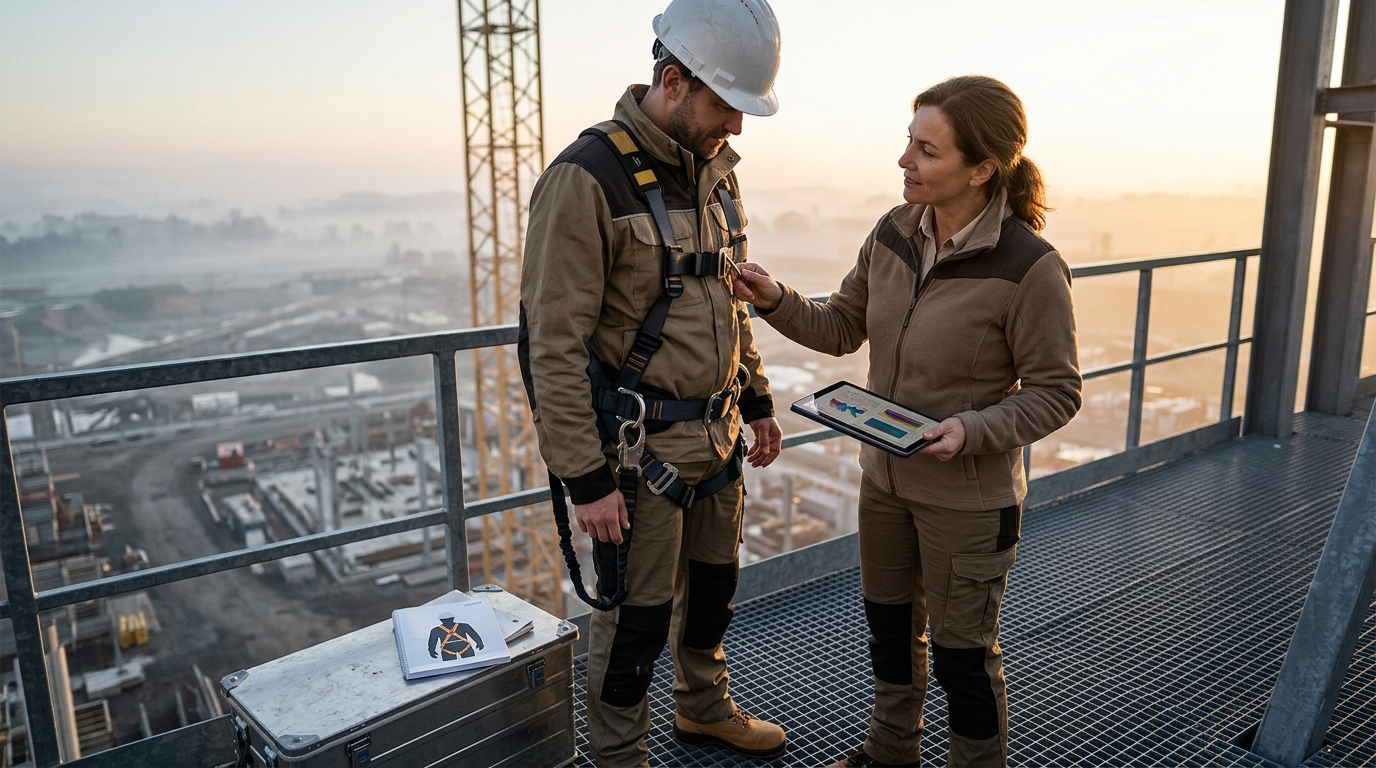
Choosing the right fall arrest harness requires matching the worker's body dimensions, the specific environmental hazards, and the required fall clearance to a certified system. Zavas provides specialized B2B sales of personal protective equipment, helping industrial teams select compliant gear. This guide covers environmental material selection, anchorage requirements, and fall clearance calculations to ensure your height safety program meets regulatory standards. For additional details, review the Nakup varovalne opreme obla.
Environmental Material Selection
Chemical and Abrasive Resistance
Temperature Extremes
Temperature significantly impacts harness performance. In extreme cold, standard polyester webbing can become brittle and lose flexibility. In high-heat environments, materials must resist melting and maintain their structural integrity. Zavas carries brands that specialize in thermal-resistant PPE, ensuring that the harness remains functional and comfortable regardless of the ambient temperature. Always check the manufacturer's temperature rating for the specific model. For additional details, review the Nakupovalna ko arica.
Moisture and UV Exposure
Outdoor work exposes harnesses to rain, humidity, and ultraviolet radiation. UV degradation weakens synthetic fibers over time, reducing the load-bearing capacity of the harness. Moisture can also lead to mold and mildew if the harness is not stored properly. Selecting harnesses with UV-stabilized materials and ensuring proper drying and storage protocols are critical for long-term compliance and safety. For additional details, review the Chelsea EVO 20.
Anchorage Requirements
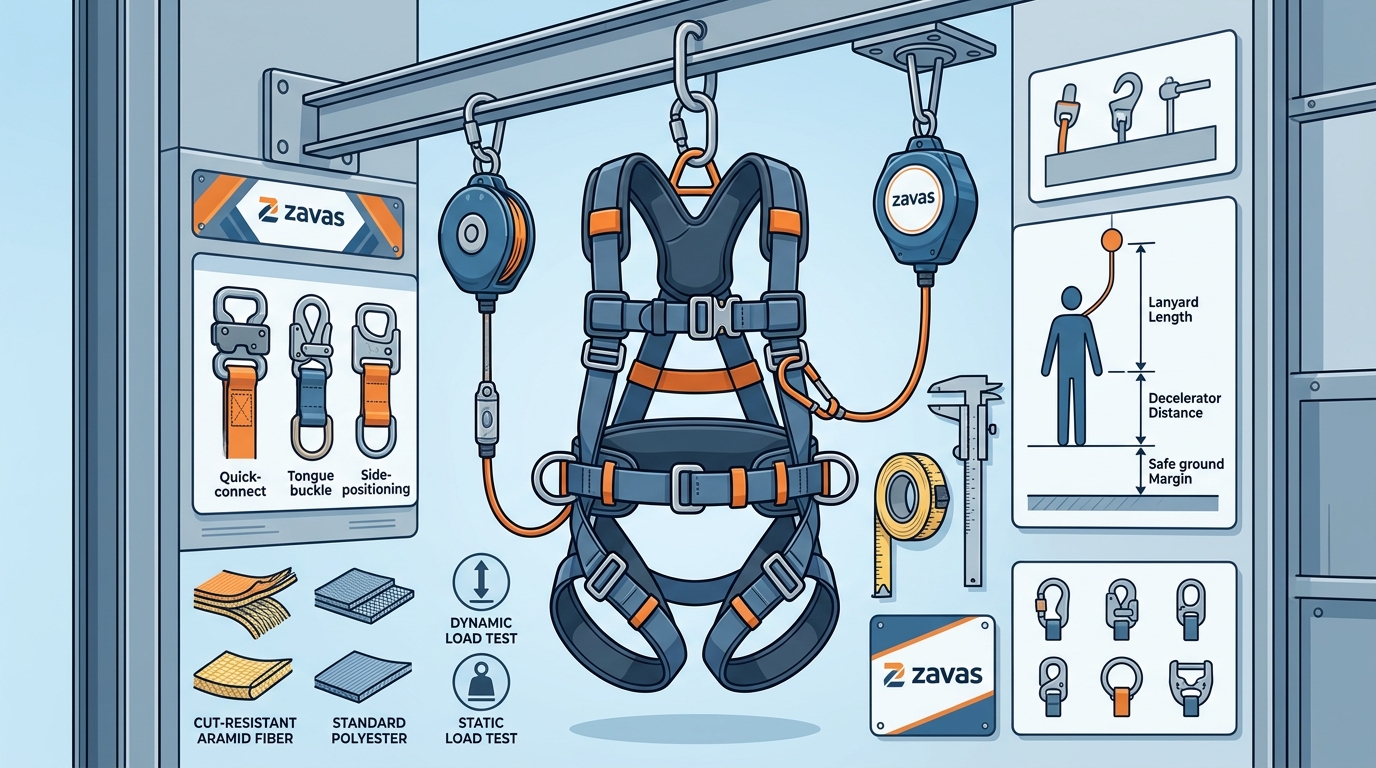
A fall arrest system is only as strong as its anchor point. The anchorage point is the fixed point to which the fall arrest system is attached. It must be capable of supporting at least 5,000 pounds (22.2 kN) per employee attached, or be designed, installed, and used under the supervision of a qualified person with a safety factor of at least two.
Structural Integrity
Connection Hardware
The connection between the harness and the anchor point requires specific hardware, such as carabiners, snap hooks, or energy-absorbing lanyards. The hardware must be compatible with the harness's D-rings and the anchor point's geometry. Mismatched hardware can lead to improper engagement and potential failure during a fall. Ensure that all connection hardware is certified and inspected regularly for wear and damage.
Single vs. Multiple Anchors
Fall Clearance Calculation
Calculating fall clearance is essential to prevent a worker from striking the ground or a lower level during a fall. Fall clearance is the total vertical distance from the worker's feet to the lowest point they could reach during a fall. This calculation must account for the worker's height, the length of the lanyard, and the energy absorption of the system.
Components of Fall Clearance
The total fall clearance is the sum of several factors. First, consider the worker's height, typically measured from the feet to the D-ring on the back of the harness. Second, add the length of the lanyard or self-retracting lifeline. Third, account for the energy absorption of the shock-absorbing lanyard, which can extend by up to 3.5 feet (1.1 meters) during a fall. Finally, add a safety margin of at least 1.5 feet (0.5 meters) to account for leg length and potential bounce.
Example Calculation
Self-Retracting Lifelines
Self-retracting lifelines (SRLs) are often used to reduce fall clearance. SRLs deploy and retract automatically, limiting the fall distance to a few feet. However, the deployment length must still be considered in the clearance calculation. Zavas provides product catalogs that detail the specifications of various SRLs, helping you select the right model for your specific clearance requirements.
Key Takeaways
- Match harness materials to environmental hazards such as chemicals, temperature, and UV exposure.
- Calculate fall clearance by adding worker height, lanyard length, energy absorption, and a safety margin.
- Use self-retracting lifelines to reduce fall clearance in tight spaces.
- Regularly inspect harnesses and hardware for wear, damage, and chemical degradation.
- Consult with a qualified engineer to verify the structural integrity of anchor points.
- Train workers on proper harness donning and fall arrest system usage.
- Store harnesses in a cool, dry place away from direct sunlight and chemicals.
Frequently Asked Questions
What is the minimum strength requirement for an anchor point?
An anchor point must be capable of supporting at least 5,000 pounds (22.2 kN) per employee attached, or be designed, installed, and used under the supervision of a qualified person with a safety factor of at least two.
How often should a fall arrest harness be inspected?
A fall arrest harness should be inspected before each use and by a competent person at regular intervals, typically every six months to one year, depending on the manufacturer's recommendations and the usage environment.
Can a standard harness be used in a chemical environment?
Standard polyester or nylon harnesses may degrade in certain chemical environments. You should select harnesses with chemical-resistant materials or coatings if exposure to acids, alkalis, or solvents is expected.
What is the role of energy absorption in fall clearance?
Energy absorption reduces the peak force on the worker during a fall. However, it increases the total fall distance by extending the lanyard. This extension must be included in the fall clearance calculation to prevent striking a lower level.
How do I choose the right harness size?
Choose a harness size based on the worker's height and weight. The harness should fit snugly without being too tight. Refer to the manufacturer's sizing chart and ensure that all straps and buckles are properly adjusted.
What is a self-retracting lifeline?
A self-retracting lifeline is a device that automatically deploys and retracts a cable or webbing. It limits the fall distance to a few feet, making it suitable for environments with limited fall clearance.
Where can I find technical guides on height safety?
Zavas provides technical guides and industry news on height safety, including articles on equipment selection and compliance. These resources help safety managers stay updated on best practices.
How should I store a fall arrest harness?
Store a fall arrest harness in a cool, dry place away from direct sunlight, chemicals, and extreme temperatures. Use a harness bag or hanger to prevent the webbing from being crushed or stretched.