

Step-by-Step Fall Arrest Harness Selection for Workplace Safety Compliance
Workplace fatalities from falls remain a critical global concern, with data from the European Agency for Safety and Health at Work indicating that falls from height consistently rank among the leading causes of serious occupational injuries. Selecting the correct fall arrest harness is not merely a regulatory checkbox but a life-saving engineering decision. This guide provides a rigorous, step-by-step framework for procurement officers and safety managers to evaluate harness specifications, ensuring alignment with EN 361 standards and operational realities. By understanding the interplay between material science, ergonomic design, and regulatory compliance, organizations can mitigate risk while maintaining workforce productivity.
Understanding EN 361 and Regulatory Standards
The foundation of any safe fall arrest system lies in strict adherence to European Norms. EN 361 is the definitive standard for personal fall protection equipment. This regulation specifies the requirements for fall arresters, including the positioning of attachment points and the minimum breaking strength of components. A compliant harness must feature a dorsal D-ring, which serves as the primary connection point for fall arrest lanyards or self-retracting lifelines.
Procurement teams must verify that every harness carries the CE marking and the manufacturer's identification. According to recent industry safety reports, non-compliant equipment accounts for a significant percentage of preventable workplace incidents. When sourcing from a specialized provider like Zavas, you gain access to equipment that has undergone rigorous third-party testing. The standard also dictates labeling requirements, ensuring that users can easily identify the harness's load capacity and manufacturing date.
Evaluating Harness Types and Configurations
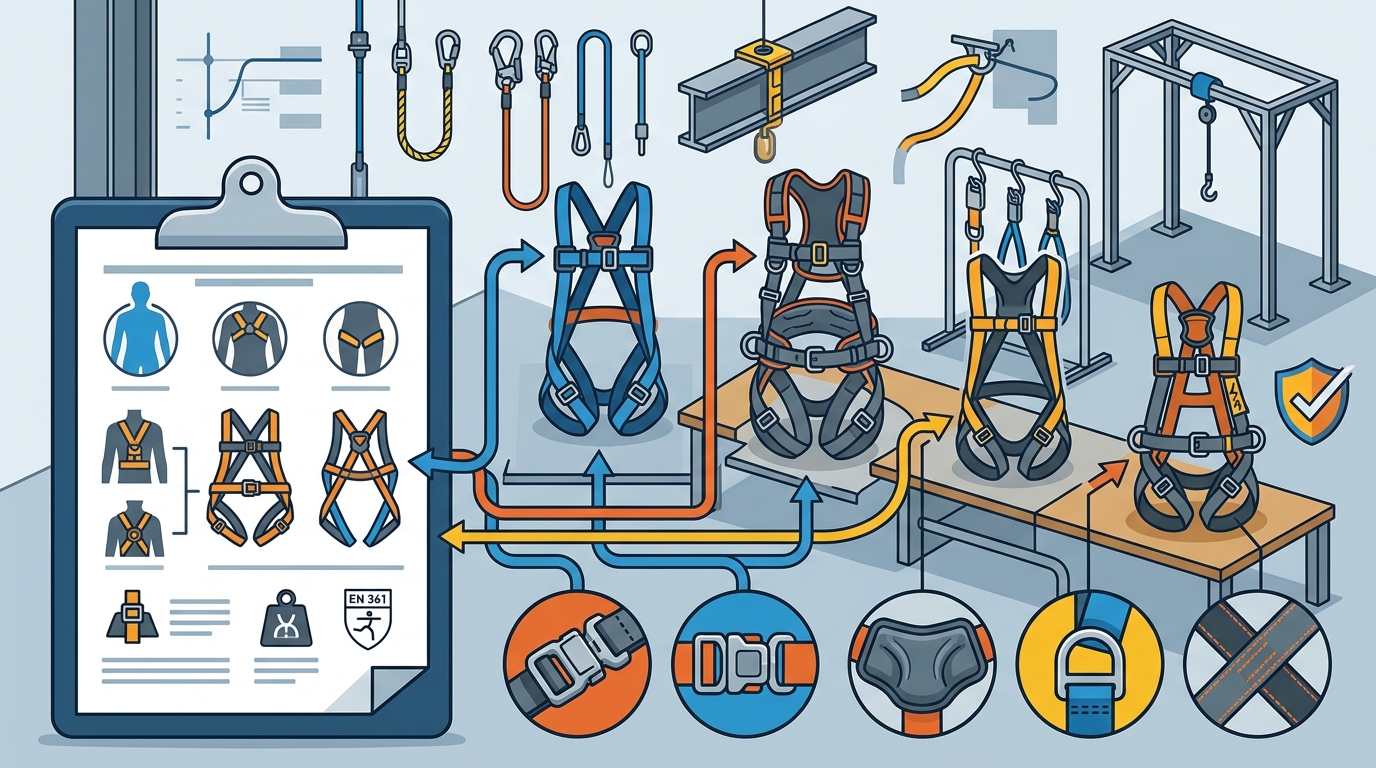
Not all fall arrest harnesses are created equal. The selection process must begin with an analysis of the specific work environment. For general construction and industrial maintenance, a full-body harness is mandatory. Partial body harnesses are strictly prohibited for fall arrest in most modern jurisdictions due to the risk of internal injury during suspension.
Single D-Ring vs. Dual D-Ring
Single D-ring harnesses are suitable for static work positions where the user does not need to move extensively. However, for dynamic environments requiring constant repositioning, a dual D-ring harness is essential. This configuration allows for 100% tie-off, meaning the worker can disconnect one lanyard to move while remaining attached to the anchor point via the other. This continuous connection is a critical component of fall prevention strategies.
Specialized Configurations
Certain industries require specialized harness designs. For example, workers in confined spaces may need harnesses with integrated chest straps to prevent inversion. Additionally, harnesses designed for work positioning must meet EN 358 standards, which differ significantly from fall arrest requirements. Confusing these standards can lead to catastrophic equipment failure. Always consult the technical datasheets provided by manufacturers like Zavas to distinguish between fall arrest and work positioning gear.
Material Selection and Durability
The longevity and reliability of a fall arrest harness depend heavily on its material composition. Modern harnesses utilize high-tenacity polyester webbing, which offers an excellent strength-to-weight ratio. Polyester is resistant to UV degradation and chemical exposure, making it superior to nylon for outdoor applications. According to material science studies, polyester retains over 90% of its original strength even after prolonged exposure to sunlight.
Webbing Width and Padding
Standard webbing width is typically 45mm. Wider webbing distributes force more effectively across the body, reducing pressure points during a fall event. However, wider webbing can also increase bulk. Safety managers must balance comfort with performance. Look for harnesses with padded shoulder straps and leg loops. These features reduce fatigue during long shifts, encouraging consistent wear. Zavas offers a range of harnesses from leading brands that prioritize both durability and user comfort.
Corrosion-Resistant Hardware
The metal components of the harness, including D-rings and buckles, must be corrosion-resistant. Stainless steel or aluminum alloys are preferred for environments with high humidity or chemical exposure. Galvanized steel is acceptable for dry indoor environments but may degrade rapidly in coastal or industrial settings. Regular inspection of hardware for pitting or rust is a critical part of the selection and maintenance process.
Ergonomics and Fit for Compliance
A harness that is uncomfortable will not be worn correctly. Poor fit is a leading cause of harness-related injuries, including suspension trauma. The harness must fit snugly without restricting movement or circulation. Key fit points include the chest strap position, which should sit at mid-chest level, and the leg loop adjusters, which must be secure but not tight enough to impede blood flow.
Adjustability Features
Look for harnesses with multiple adjustment points. Quick-release buckles allow for rapid donning and doffing, which is essential for emergency response teams. Adjustable leg loops ensure a secure fit for workers of varying sizes. According to ergonomic research, properly fitted harnesses reduce the risk of injury by up to 50% compared to ill-fitting alternatives. Investing in adjustable, high-quality harnesses reduces the need for frequent replacements and improves worker satisfaction.
Suspension Trauma Prevention
Suspension trauma occurs when a worker hangs in a harness for an extended period after a fall. The harness design plays a crucial role in mitigating this risk. Harnesses with integrated foot loops or stirrups allow the worker to stand and relieve pressure on the legs. Some advanced models include built-in relief straps that can be deployed to help the worker assume a more upright position. These features are vital for rescue planning and post-fall recovery.
Inspection and Maintenance Protocols
Selection does not end at purchase. A robust inspection protocol is required to ensure ongoing compliance. EN 361 mandates that fall arrest equipment be inspected before each use by the user and periodically by a competent person. The inspection must check for cuts, abrasions, burns, or chemical damage to the webbing. Metal components must be free of sharp edges or corrosion.
Documentation and Traceability
Maintaining detailed records of inspections and maintenance is a legal requirement in many jurisdictions. Each harness should have a unique identifier linked to its inspection history. This traceability ensures that equipment is retired before its service life expires. Most manufacturers recommend a maximum service life of five to ten years, depending on usage conditions and storage environment. Zavas provides comprehensive catalogs and technical guides to help you establish these protocols.
Retirement Criteria
Any harness involved in a fall arrest event must be immediately removed from service, even if no visible damage is apparent. The internal fibers may be compromised, rendering the harness unsafe for future use. Additionally, harnesses exposed to extreme temperatures, chemicals, or UV radiation for extended periods must be evaluated for early retirement. Proactive retirement prevents catastrophic failures and ensures that only reliable equipment is used on site.
Training and Implementation
Equipment alone cannot prevent falls. Comprehensive training is required to ensure that workers understand how to use their harnesses correctly. Training should cover proper donning and doffing techniques, inspection procedures, and emergency rescue plans. Workers must understand the concept of fall clearance and the importance of anchor point placement.
Rescue Planning
A fall arrest system is incomplete without a rescue plan. Suspension trauma can become fatal within minutes. Employers must have the equipment and personnel trained to retrieve a fallen worker quickly. This may involve the use of rescue kits, winches, or aerial lifts. Training should include drills to simulate rescue scenarios, ensuring that all team members know their roles. Zavas offers specialized courses on working at height, which can enhance your team's preparedness.
Continuous Improvement
Safety is a dynamic process. Regular reviews of fall protection policies should be conducted to incorporate new technologies and regulatory updates. Feedback from workers who use the harnesses daily is invaluable for identifying areas for improvement. Encouraging a culture of safety where workers feel empowered to report defects or suggest improvements is essential for long-term compliance.
Frequently Asked Questions
What is the difference between EN 361 and EN 358?
EN 361 is the standard for fall arrest equipment, designed to stop a fall. EN 358 is the standard for work positioning equipment, designed to hold a worker in place. Using EN 358 for fall arrest is non-compliant and dangerous.
How often should a fall arrest harness be inspected?
Harnesses must be inspected before every use by the wearer and at regular intervals by a competent person, typically every six months, depending on usage frequency and environmental conditions.
Can a harness be used after a fall?
No. Any harness that has been subjected to fall arrest forces must be immediately removed from service and destroyed or returned to the manufacturer for evaluation. Internal damage may not be visible.
What is suspension trauma?
Suspension trauma is a medical condition caused by hanging in a harness for too long. It occurs when blood pools in the legs, leading to fainting or death. Quick rescue is critical.
How do I choose the right harness size?
Measure the worker's chest circumference and leg length. Consult the manufacturer's sizing chart. The harness should fit snugly without restricting movement or circulation. Adjustable harnesses offer more flexibility.
Are there harnesses for specific industries?
Yes. There are harnesses designed for construction, telecommunications, wind energy, and confined space entry. Each type has specific features tailored to the unique hazards of that industry.
What is 100% tie-off?
100% tie-off means that the worker is connected to an anchor point at all times. This is achieved using dual D-ring harnesses and two lanyards, allowing the worker to switch attachment points without losing protection.
Secure Your Workforce Safety
Choosing the right fall arrest harness is a critical investment in your workforce's safety and your company's compliance. By following this step-by-step guide, you can ensure that your equipment meets the highest standards of quality and reliability. Zavas is your trusted partner for premium personal protective equipment. Visit our catalog to explore our range of EN 361 compliant harnesses and schedule a consultation with our safety experts to tailor a solution for your specific needs.